Buying a Lot to Build in Rosarito: What to Check First
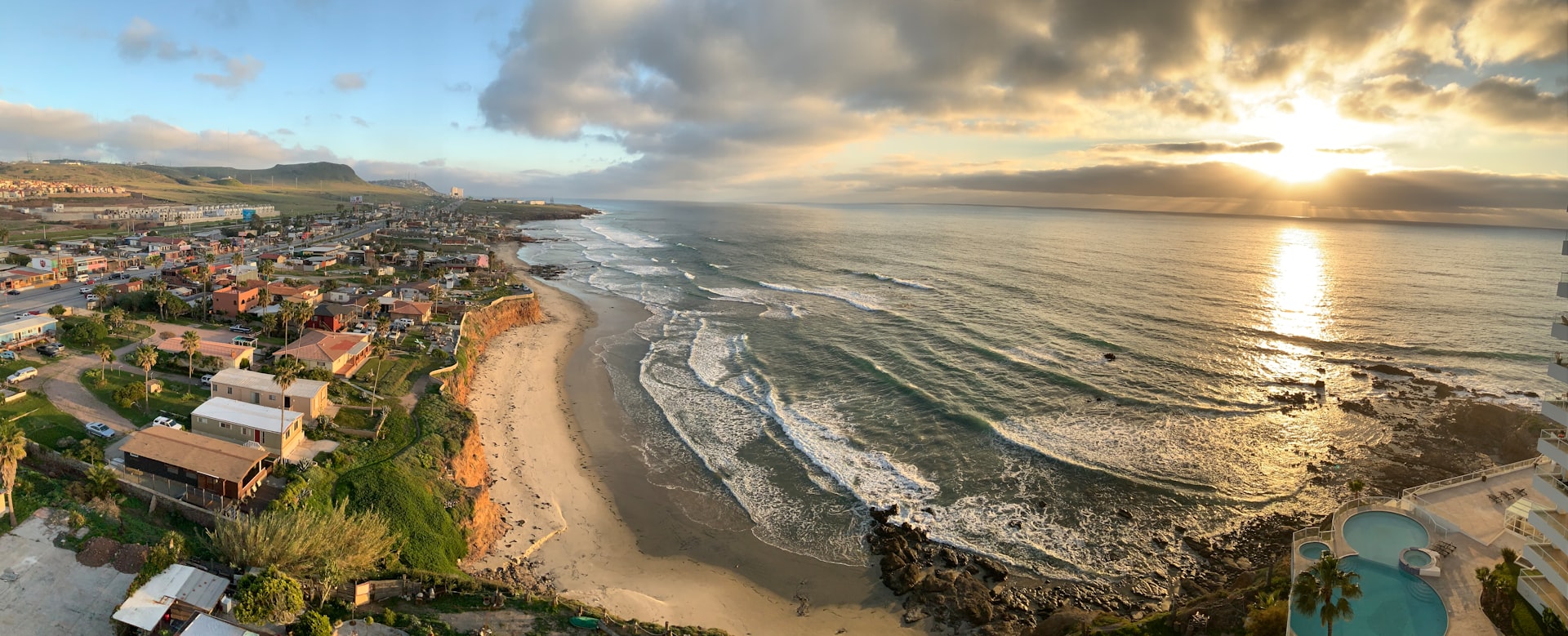
A lot (terreno) in Playas de Rosarito is only worth buying if four things check out before you pay: the seller holds registered title free of liens; the municipality will issue a land-use dictamen for the house you want; the lot comes from a subdivision the authorities approved, because otherwise no building licence can be issued; and water and electricity can actually reach it. On the coast, add the 20-metre federal zone, which no one can own; near an ejido, confirm the land has left the agrarian regime. Foreigners buy through a fideicomiso.
1. Title: the escritura and the registry certificate
Ask for the seller's escritura (deed) and confirm it is recorded in the public property registry (RPPC). Then order a current certificado de libertad de gravamen from the RPPC: it shows who the registered owner is and whether there are mortgages, seizures or other annotations. The municipality also asks for one when it reviews the transfer tax (Ley de Ingresos de Playas de Rosarito 2026, article 9). The registered owner must be the person selling to you.
Check the predial too. Unpaid predial follows the land to the new owner (Ley de Hacienda Municipal, article 75 BIS A, section VIII), and the notary cannot sign without a certificate that it is paid up (section X). The municipality issues a certificate of no fiscal liens for 5.20 UMA, about $610 pesos (estimate, 2026).
Be careful with substitutes. A water connection, a "constancia de posesión" or a residence letter is not title: CESPT will contract water service on the strength of an ejido possession certificate or a municipal residence letter for possessors, so a lot with a meter can still have no registered owner.
2. What you can build: uso de suelo
Land use is decided by the municipality. In Rosarito the Departamento de Usos del Suelo of the Dirección de Administración Urbana, within the Secretaría de Desarrollo y Servicios Urbanos, issues:
- a factibilidad (opinión técnica) de uso del suelo, valid for six months — for a lot up to 500 m², 11.45 UMA, about $1,343 pesos; and
- a dictamen de uso del suelo for building a home — for a lot up to 300 m² inside the urban area, 14.36 UMA, about $1,685 pesos.
(2026 fees from the Ley de Ingresos, article 27; estimates.) The Ley de Edificaciones de Baja California requires the land-use dictamen before you apply for a building licence (article 57), and nothing may be built without that licence (article 58). Get the opinion before you sign, or make the purchase conditional on it.
3. Is the subdivision authorized?
Under the Ley de Desarrollo Urbano del Estado de Baja California, dividing land that requires streets and urban works is a fraccionamiento, and dividing it without them is a subdivisión (article 157). Both need approval, as a rule from the Ayuntamiento (article 150); the State publishes the authorization agreements and authorizes the sale of the resulting lots (article 10, section XII).
This matters because of article 58 of the Ley de Edificaciones: no building licence will be granted for lots that resulted from a fraccionamiento or subdivision made without approval — they must first be regularized. Rosarito's municipality issues a document on the legal status of a fraccionamiento for 2.07 UMA, about $243 pesos (estimate). If the seller is splitting a larger parcel, the subdivision must be approved and recorded before your lot exists as a separate property.
4. Water, electricity and drainage
- Electricity (CFE). For an ordinary household contract, the nearest pole must be within 35 metres in an urban area or 50 metres in a rural one; beyond that, CFE requires a feasibility request and may quote the works needed.
- Water and sewer (CESPT). A new domestic contract on existing networks requires a positive CESPT feasibility inspection, proof of ownership, the official street number from the Ayuntamiento, and a pavement-cutting permit if the street is paved. Where the network is more than 20 metres away, it becomes a special-works contract.
- Outside the urban area. Developments located outside population centres must be self-sufficient in infrastructure and services (Ley de Desarrollo Urbano, article 156).
5. Beachfront lots and the federal zone
Where the coast has beaches, the zona federal marítimo terrestre (ZOFEMAT) is the 20-metre strip of dry land next to the beach (Ley General de Bienes Nacionales, article 119). It is federal property for common use (article 7), and like all public-domain property it is inalienable and cannot be acquired by possession (article 13). No deed can include it, whatever a sketch or a seller says.
Building on or making special use of that strip requires a concession or permit (article 8). SEMARNAT, the federal environment ministry, administers the zone, grants concessions and measures and marks it (articles 72, 119 and 120). A concession gives no ownership — it creates no real rights (article 16). If the sea advances, private land that becomes federal zone stops being private, though the owner has preference for a concession (article 122). Access to the beach cannot be blocked (article 8). Rosarito's land-use opinion for lots next to or within the federal zone is issued only when the federal authorization exists (Ley de Ingresos 2026, article 27).
6. Ejido land: the red flags
Under the Ley Agraria:
- Common-use land of an ejido is inalienable (article 74).
- Parcel rights can only be sold to other ejidatarios or residents (avecindados) of the same ejido (article 80) — not to you.
- A parcel leaves the ejido regime only when the assembly has approved dominio pleno, the National Agrarian Registry (RAN) removes it from its records, and the resulting title is recorded in the RPPC (articles 81–82).
- On the first sale after dominio pleno, family members, the ejido and others have a right of first refusal; without proper notice the sale can be annulled (article 84).
Red flags: a "cesión de derechos ejidales", a seller whose only paper is a constancia from the comisariado ejidal, or no RPPC entry at all.
7. Foreign buyers: the restricted zone
Foreigners may never acquire direct ownership of land within 100 km of the borders and 50 km of the coast (Constitution, article 27, section I). In Rosarito you buy through a fideicomiso: a Mexican bank holds title, with an SRE permit, for your use and benefit (Ley de Inversión Extranjera, article 11), for up to 50 years, renewable (article 13).
Costs to expect (estimates, 2026)
Rosarito's transfer tax (ISAI) is progressive, from 1.5% on the first $500,000 pesos of the taxable base to a 5% marginal rate above $6.8 million (Ley de Ingresos 2026, article 9). On a $1,000,000-peso base, about $17,500 pesos. A vacant lot also pays predial every year; a clean, maintained lot with the Certificado de Mejoramiento de la Imagen Urbana can get up to 50% off.
How Rosarito Legal can help
Rosarito Legal, the Rosarito office of Galarza Legal, reviews the deed and RPPC certificate, requests the land-use opinion and the fraccionamiento's legal-status document, checks for federal-zone and ejido issues, and coordinates the fideicomiso with the bank and the notary. We work in English and Spanish, and you pay the notary, bank, registry and municipality directly.
Sources
- Ley de Ingresos del Municipio de Playas de Rosarito 2026, arts. 8, 9, 27, 28
- Ley de Desarrollo Urbano del Estado de Baja California, arts. 10, 150, 156, 157
- Ley de Edificaciones del Estado de Baja California, arts. 57–58
- Ley General de Bienes Nacionales, arts. 7, 8, 13, 16, 72, 119, 120, 122
- Ley Agraria, arts. 74, 80–84
- Constitución Política, art. 27, fr. I and Ley de Inversión Extranjera, arts. 11, 13
- CESPT, domestic service contract requirements, CESPT contract types and CFE, household contract requirements
- Ley de Hacienda Municipal del Estado de Baja California, art. 75 BIS A
General information about Mexican law as of October 2026, not advice on a specific case; every amount is an estimate.